Tracing the Path from SMS Payments to Same-Day Cashouts in Offshore Gaming Destinations
Parker Butler · Aug 24, 2026
Payment Pathways in Offshore Gaming: The Shift from SMS Transactions to Rapid Daily Withdrawals
Observers note that payment methods in offshore gaming destinations have developed through several distinct phases since the early 2000s. SMS-based deposits emerged as one of the initial accessible options for players in regions with limited banking infrastructure. These carrier billing systems allowed users to add funds directly through mobile phone accounts, which operators integrated with platforms licensed in jurisdictions such as Curaçao and the Isle of Man. Industry data indicates that by 2015, carrier billing accounted for a measurable share of deposits in select markets where traditional credit card processing faced restrictions. Technological improvements followed as mobile networks upgraded to higher-speed protocols. Developers refined integration between payment gateways and casino software, which reduced transaction confirmation times from several minutes to under 30 seconds in many cases. Research from communications regulators shows that SMS volume for digital services grew steadily through the 2010s, driven by widespread smartphone adoption. Operators in offshore locations responded by expanding support for these methods while maintaining compliance with local licensing requirements that emphasize transaction monitoring.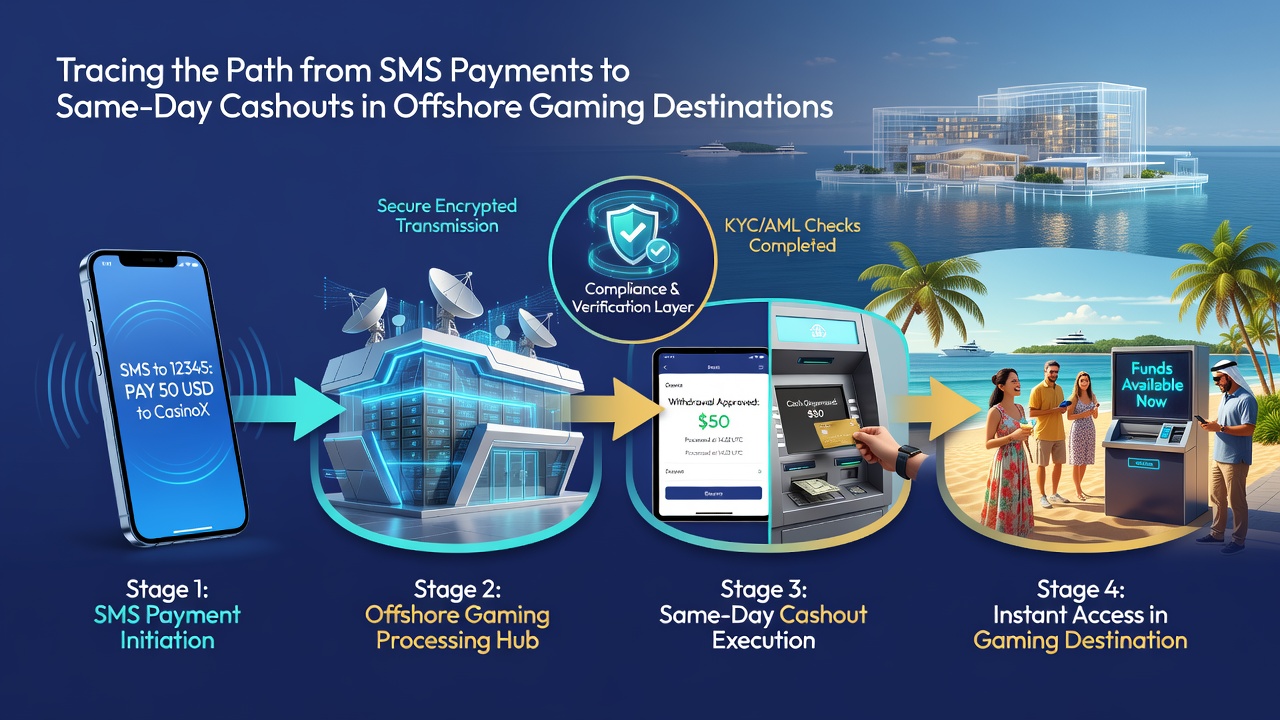
Observers note that payment methods in offshore gaming destinations have developed through several distinct phases since the early 2000s. SMS-based deposits emerged as one of the initial accessible options for players in regions with limited banking infrastructure. These carrier billing systems allowed users to add funds directly through mobile phone accounts, which operators integrated with platforms licensed in jurisdictions such as Curaçao and the Isle of Man. Industry data indicates that by 2015, carrier billing accounted for a measurable share of deposits in select markets where traditional credit card processing faced restrictions. Technological improvements followed as mobile networks upgraded to higher-speed protocols. Developers refined integration between payment gateways and casino software, which reduced transaction confirmation times from several minutes to under 30 seconds in many cases. Research from communications regulators shows that SMS volume for digital services grew steadily through the 2010s, driven by widespread smartphone adoption. Operators in offshore locations responded by expanding support for these methods while maintaining compliance with local licensing requirements that emphasize transaction monitoring.Expansion of Carrier Billing Infrastructure
Multiple offshore sites adopted SMS top-up systems to serve players who preferred not to share banking details. These platforms partnered with telecommunications providers across Europe, Asia, and Latin America, creating networks that processed micro-transactions efficiently. Figures from mobile industry associations reveal that global SMS payment volumes reached several billion transactions annually by the late 2010s, with gaming representing one segment of that activity. The process typically involved a player sending a short code message, receiving a confirmation reply, and seeing funds credited to an account balance almost immediately. Security protocols evolved alongside volume increases. Operators implemented additional verification layers such as one-time passcodes and account linkage checks without requiring full identity documentation in every instance. Data compiled by international payment processors demonstrates that fraud rates for carrier billing remained lower than some card-based alternatives during this period, which encouraged further adoption in remote gaming environments.Transition Toward Faster Withdrawal Mechanisms
The move from deposit-only SMS systems to integrated withdrawal options occurred as backend reconciliation processes improved. Offshore destinations updated their operational frameworks to support same-day cashouts, often through e-wallet intermediaries that connected directly to the original payment channel. Reports from gaming technology conferences document that processing windows shortened from 24-48 hours to same-day completions in compliant jurisdictions by 2023. In August 2026, several platforms operating under multi-jurisdictional licenses announced expanded same-day payout windows for verified accounts funded via SMS. These updates aligned with broader shifts in digital payment standards, where real-time settlement capabilities became more common across borders. Regulatory bodies in places like Malta and Gibraltar issued updated guidance on transaction speed and consumer protection measures, which operators incorporated into their systems.